
Readings:
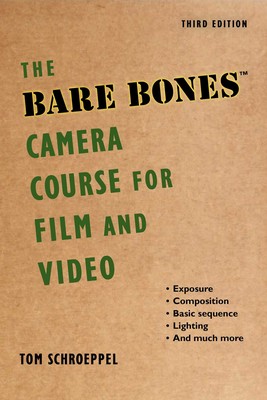
This week in the Tom Schroeppel’s textbook, “The Bare Bones Camera Course for Film and Video” I read the two chapters on Lighting and how to physically apply everything you’ve learned, by just “Doing It”.
In chapter 7 all about lighting, Schroeppel talks about the importance of light and how there are many different ways to light a scene. But the most basic three types are exterior, interior and then a basic set up or another version is 3-point-lighting.
Exterior lighting is just utilizing the most powerful light in the world, the sun. Of course the sun can be a difficult light to manage since it’s always moving. So Schroeppel’s tip is to have the subject facing the sun so it’s lit evenly on all sides and then use reflectors or bounce cards to fill in any shadows.
Interior lighting is using specific studio lights indoors to manufacture any type of feeling you want. The most common lights used are focusing quartz, broads and soft lights. A focusing quartz is like a spotlight that you would see on stage for a theatrical production. They are very strong and don’t light a large area. A broad is just a large room light. It just coats the whole area in one consistent blanket of light. And finally a soft-light or a soft-box light. Is a soft bounce light used to fill in shadows or to softly light a room by bouncing it off walls and ceilings.
The final lighting set up, the basic set up consists of a key-light, which usually just front lights the subject. A fill light, which fills in any of the shadows the key light may create and a back light which separates the subject from the background. Then if the three point lighting isn’t enough you can add a fourth light which is the background light which is bounced off the wall to light the room around the subject.
In chapter 9 which all about actually taking all the information about pre-production, production and post and applying to an actual project, Schroeppel talks about understanding what you want to have achieved by the end of the project and knowing where you want to film it, who is should be filmed. Knowing exactly where the camera will go for each shot by creating storyboards and scripts ahead of time.
It’s also important to know who you want your actors to react and/or speak and you need to communicate all of your wants and needs simply to everyone else you’re working with so that they have the same end goal as you in mind when working on the project.
Good and Bad Examples of Storytelling:
The traveling news series “On the Road with Steve Hartman” is hands down one of my favorite to watch. Hartman always finds the most heartwarming stories and tells them in a way that makes you actually care for these people you’ve never met. His sound bites are always super compelling. You can always clearly understand what everyone is saying and the nat sound used in his b-roll pops really well. Plus the visuals he gets always match up with what he is saying and he makes a pint to do a fun and interesting stand – up in each package.
This is hands down one of my favorite documentaries I’ve ever watched. It takes real people and brings you into their lives for a little while ot show you that hunger isn’t just a homeless person’s problem and that we need to stop treating it like it is. The visuals alone are breathe taking at times because you just don’t expect to see these families struggling with something like hunger. The whole documentary uses every storytelling technique to change the viewers perception of hunger and starvation and how there is a difference and more people then you think struggle with it.
Overall this news package does it’s job. It tell you the story about a UPS delivery person throwing packages on porches and breaking them. But the visuals in the package get to a point where they are actually distracting. The second women they interview, the way they position her next to the mail box and keep cut in really close to her face is unsettling and they continuously cut to the same ECU of a mail box like 5 times with in the package. You can just sort of tell that they didn’t have enough b-roll to cover the whole story.
My Mini-doc Pre-Production:
For my mini-doc I chose to do a short bio piece on one of the long time music teachers at Lakehouse Music Academy. Dan is a really funny guy and on top of teaching individual lessons and group bands. He also teachers music at a school in Asbury and continues to perform and create music in multiple of his own bands. He calls himself living proof that you can do what you love and actually make a good living for yourself.
In the pre-production packet I outlined what sort of visuals I need to collect to create an interesting and compelling piece. I also list some of the question that I’m going to ask Dan, but realized that I’m going to see where our conversation takes us and after I get his full interview and cut what I want out of it. I’ll see who much narration is actually needed to complete the piece and then once I’m editing I’ll take the b-roll that I’ll be filming and the pictures that Dan has given me and I’ll make sure to make them up with whatever he or I are talking about.
 taylorsniffen.com