
Reading’s for the Week
Color:
When you see the word color you must think of kindergarten class learning all the colors of the rainbow and picking out your favorite and getting a bunch of things in that color because it made you happy, but in reality color means so much more. When creating an animation using color or another word for it being hue to enhance the story is very important. In the textbook “Animated Storytelling”, they describe using color as a way to help “express emotion, clarify motivation, and even dictate the entire meaning of the piece” (Blazer).

By starting off your pre-production with a “color script” you can plan out the most majorly used and important colors in each scene and how you might utilize them. Blazer’s big tip when your planning your color script is to make sure the story is still more important. Even if a color looks aesthetically pleasing it needs to make sense with the story that’s already been written and planned out.
Other big tips that Blazer describes when using color are to make sure you limit you pallet so that you don’t ending up using every color that was ever created and muddle your stories meaning. Use the color to support your characters in the scene not upstage them with too vibrant and saturated colors. Similarly to the rule before it, make sure to use saturation mindfully because if the back ground is too saturated then you may loose the subject in all the color. And my favorite tip of hers which is use a surprise color as a way to punctuate something important. If your creating a story with a bunch of animals living happily under the sea the biggest colors in the color pallet are going to be cool tone, blues, greens and purples, so in order to make the bad fish stand out I would make his scales a fiery red and yellow.
Weird Science:
By far this section of the “Animated Storytelling” book has been my favorite. It’s all about the important of experimentation and pushing your limits when creating, whether that’s when filming or animating or even drawing. Blazer’s biggest tip about how werid of a creartive since art is, is that it’s ok to have failed “science experiments” aka she means it ok to make bad art. In fact it’s actually good, it can show you where you need to improve but it can also inspire for a different piece that could end up being fantastic.
Blazer also talks about how important it is to continue to work on personal projects and make work that is what you want to be hired to do. So even if it’s the simplest of projects make it look professional and spectacular so that you always have new and incredible content to share with employers.
Stop Motion Inspiration:
- The first video inspired me for my linear story line because it shows motion really well and how to achieve a smooth look while making it seem like something is moving down a corridor when in reality it’s just a bunch of photos.
- 3. & 4 .all inspire me for my non-linear puzzle piece stop motion because each video is using that very close up and tight camera angle to put something together and have the big reveal at the end. But all 3 videos are still very aesthetically pleasing and keep you interested all the way until the end for the reveal.
5. Overall the 5th stop motion just amazes me. The clean and fluid transitions between the chess pieces becoming solid pieces to them becomes clay balls and rolling across the board is fascinating and I can’t imagine the amount of work that went into such a short and simple seeming video. But also through the use of the music and the different fun movements of each chess piece the whole video kept me tense and on the edge of my seat waiting to see which side was going to win.
Practicing Stop Motion:
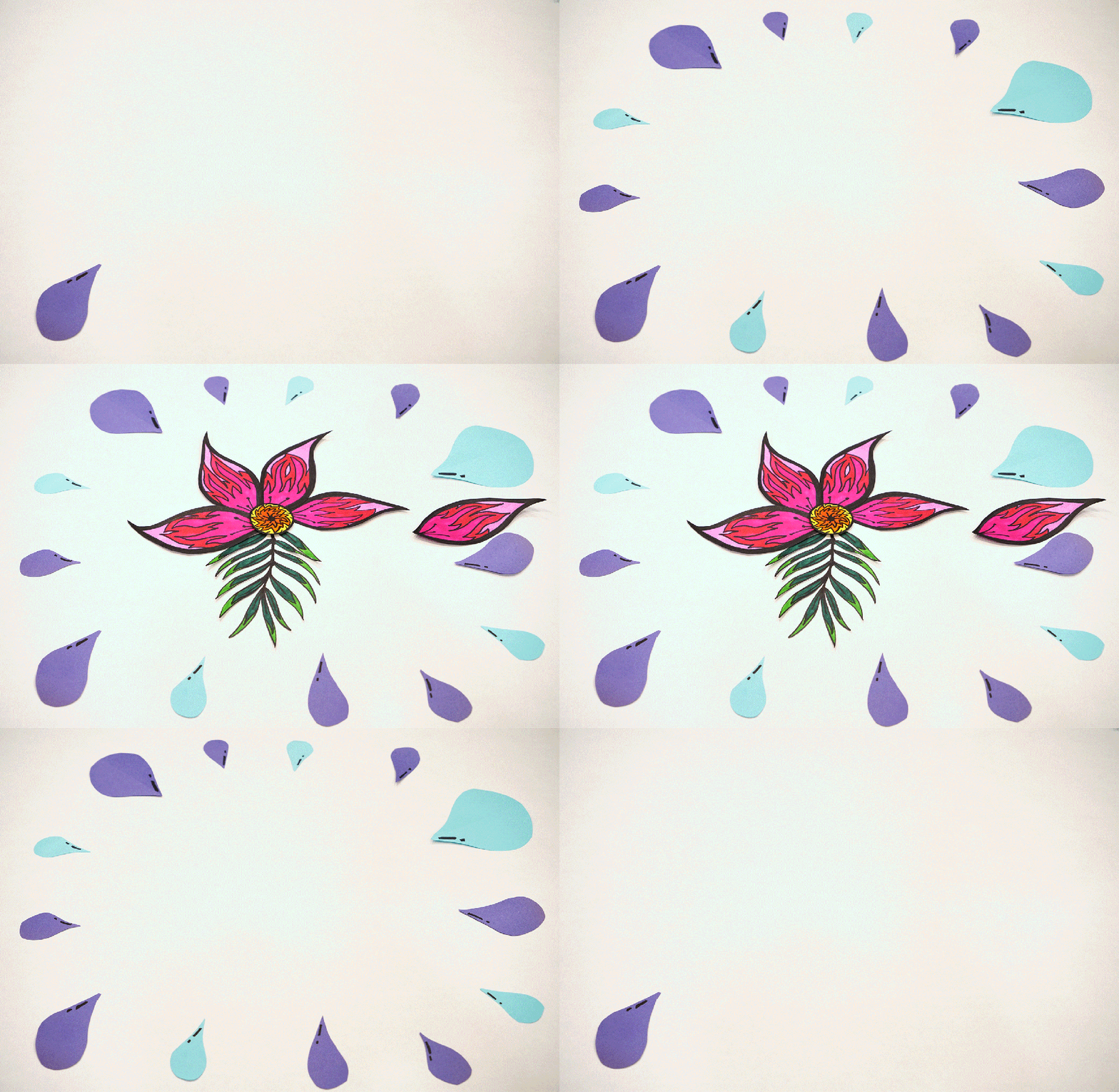
This week in order to further prepare for the longer and more complex stop motions I’m going to be making a made a short and simple stop motion that focused more on the craft and fundamentals of making one verses the actual linear or non-linear structure of the story in a stop motion. In the one I made this week and I drew, colored and cut out a pretty little flower and raindrops and had each piece appear one at a time and move the flower into place and in a circle. This helped me practice getting the flow of all the images together and helped me to learn that if there is an aspect with my stop motion that I don’t want to move in all the images then I need to tape it down so that I don’t by accident bump into it and mess the whole thing up. This past week that happened a few times when I didn’t realize my bracelets had hit some of the raindrops as I was moving the flower, so in a few of the shots the raindrops move just a little bit.
Stop Motion Pre-Production Summaries & Storyboards:
Attached below are the two pre-production summaries for my two different stop motions I will be making this coming week. The summaries include, general info on each project, a creative brief detailing the exacts for the project and my storyboarding panels.
 taylorsniffen.com