
Readings:
This weeks reading are all about the best to record sound and edit. In the textbook “The Bare Bones Camera Course for Film and Video” the author Tom Schroeppel talks about audios in many different aspect. He covers audio patterns like omnidirectional or directional pick up patterns. This addresses how a specific mic will or will not pick up the audio around it. An omnidirectional mic will pick up sound all around it “in all directions”, while s directional mic had two basic pick up patterns cardioid, which is like a heart shaped pickup pattern with the pointed end on the heart being the best place for noise sensitivity. And the second common pick up for a directional mic, for example a boom/shotgun mic is supercardioid, which has an extremely narrow sensitivity for sound. “the area of sensitivity is so narrow that, to pick up the correct sound, you have to aim the microphone like a shotgun directly at the source” (Schroeppel 98).
In a different article “7 Secrets for Getting Pro-Sounding Vocals on Home Recordings” written by Filippo Gaetani. He talks about necessary things in order to get the best sounding narration/ recording. He mentions filming in a bedroom as the easiest place to get the least amount of sound echos off of walls since the mattresses pillow, blanket and even window curtains act as so9und barriers or dampeners that absorb your voices echo. He also talks about practicing and doing multiple takes in order to get the most natural and smooth sounding dialogue/ narration. As well as also making sure to test your audio level before you actually start to record your a -roll of audio. When recording you want to avoid the red zone on your level bar and avoid any peaking or clipping. So for example if you know your going to yell or scream or make a loud noise at any point in your recording then step back from the mic or lower the recording level so it doesn’t clip your track.
One of the final articles I read on sound editing this week “Sound Advice: Editing Audio for Video” by Hal Robertson is all about how editing for sound is different then editing for video and when your editing audio for video you can’t just pay attention to the video first and think of audio later as an after thought they both hold equal importance and need to be thought of as separate things and then brought together at the end.
The first thing Robertson talked about was just like video has A-roll and B-roll so does audio. A-roll is your well recorded narration or speaking track that is necessary to the story. B-roll is any additional sound effect or music or audio snippet that doesn’t necessarily need to make the final export if it doesn’t fit. When editing audio you should also overlay the clips so that there is no jarring change in clip and you can toggle the fade in and fade out so there is always a seamless transition. Then in order to check your work listen with your eyes closed so that only your ears are assessing it. Things sound different when you’re reading and listening and watching and listening. So in order to get the most raw and objective listen to just your edited audio only use your ears.
Well mixed Audio & Video:
“A Quiet Place” the movie has countless scenes where the visuals and audio go hand in hand. The video above lists some of the scariest scenes due to the use of silence and then a jarring sound effect. The most stand out scene in the movie for me is when the family is walking back from getting supplies and its shots of beautiful scenery and this lovely family all together and then just the little boy in the back playing with a toy spaceship and then he what seams like the loudest thing in the world when the spaceship sound effects go off and as fast as the sound went off the monster swooped and killed the boy and then just like that it went back to silence and then seeing the look on the parents faces. It’s literally heart wrenching.
Dunkirk’s entire sound scape is the reason the movie actually makes you feel like your going to throw up from anxiety the entire time. Hans Zimmer’s score uses a specific type of simultaneous ascending and descending scales to make you constantly feel like something is building up, but then Nolan’s specific choice to have a stop watch running under the entire movie that speeds up and slows down when ever there is fighting verses just idol dialogue forces the audience heart rate to actually increase and decrease with it. Watching this film in theaters actually felt like a work out by the end because I was sitting on the edge of my seat with my heart pounding the entire time.
The audio design in the film “Gravity” was revolutionary, especially the first 13 minute continuous sequence that had audience trying to adjust to this new way of listening. Having most of the actors dialogue recorded through a helmet mic and then actually creating the sound vacuum of space and addressed sound as an afterward vibrations not as an actual sound frequency is wild. he part where Sandra Bullock is being whipped around on the broken space ship arm is wild and the sound felling like it’s spinning in circles around you and then the sound track being made for surround sound sound so that different parts clash and comes from different places in a room really made this film.
My Podcast (Grammys More Like #Scammys):

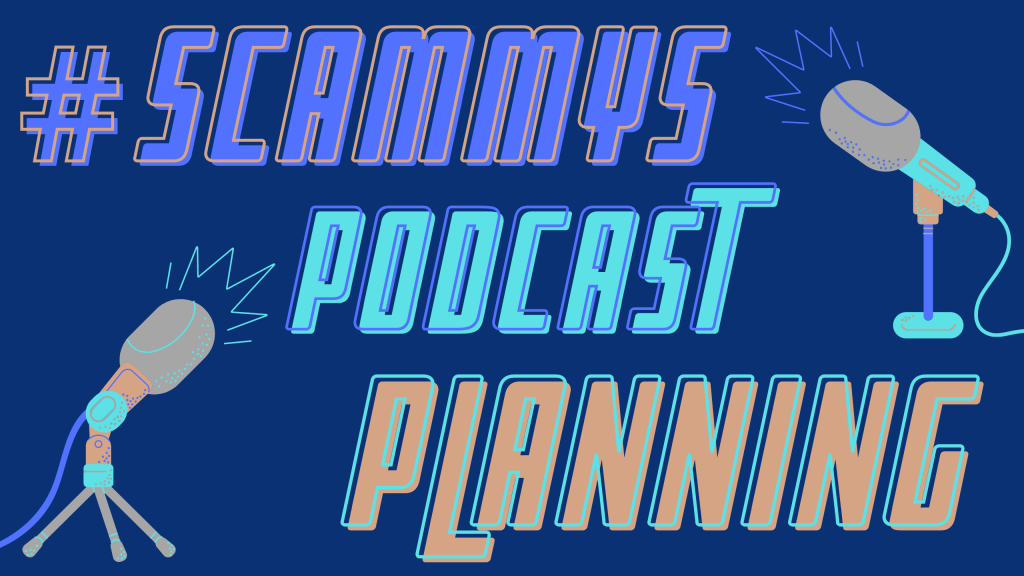
As I addressed in my previous blog post about this project, I made a podcast all about the corrupt and racist-ness of the Grammy awards and how the 2021 award show had some major upsets and scandals.
Using the methods that I learned from my reading this week, my co-host and I used my bed room since it is the quietest place in my house and recorded our A-roll. We had to do many takes due to messing up or just disliking how our voices sounded or how we were inflecting on a certain part of the sentence. When recording I used Adobe Audition to record and monitor the vocals and we used one Fifine condenser mic with a cardioid pick up pattern. Since I only had one mic and there was two of us recording my co0hosts voice doesn’t sound a bit different then mine and she also speaks much softer then me so there was a little more editing to do on her voice.
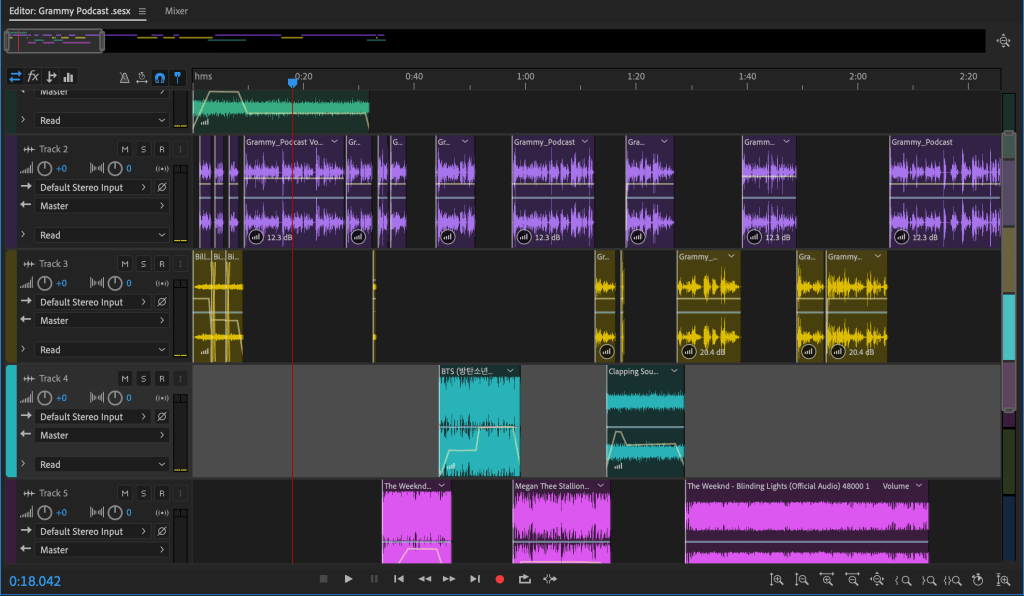
Once I had the A-roll recoding I went and collected my B-roll of the different speeches i was going to using sound bites from and the small parts of the songs I was going to be sampling. Then I added all of it to my mixdown in Audition and began to edit it together. The original mix was over 10 minutes so I had to get out of little of the dialogue and trim the B-roll a bit to make it fit the 10 minute mark. After that I listened back numerous times (with my eyes closed) in order to make sure all the transitions are clean.
Overall the podcast was a tone of fun to make, my co-host and I had a lot of laughs recording our narration and it was fun adding the different music and sound effects. One thing I wanted to mention was that one of my classmates had left me feed back the previous week about adding a sound bite of Jungkook of BTS’s livestream and while the idea was t I had k about how the ear reacts different than the eye. If this podcast video accompanying it then I probably would have added it since your would have seen h talking to the camera and seen the number of viewers but since this is only audio and his livestream he only speaks Korean I thought it would be very jarring and confusing to listeners so I did not add it.
Give my podcast a listen to here:








 taylorsniffen.com