
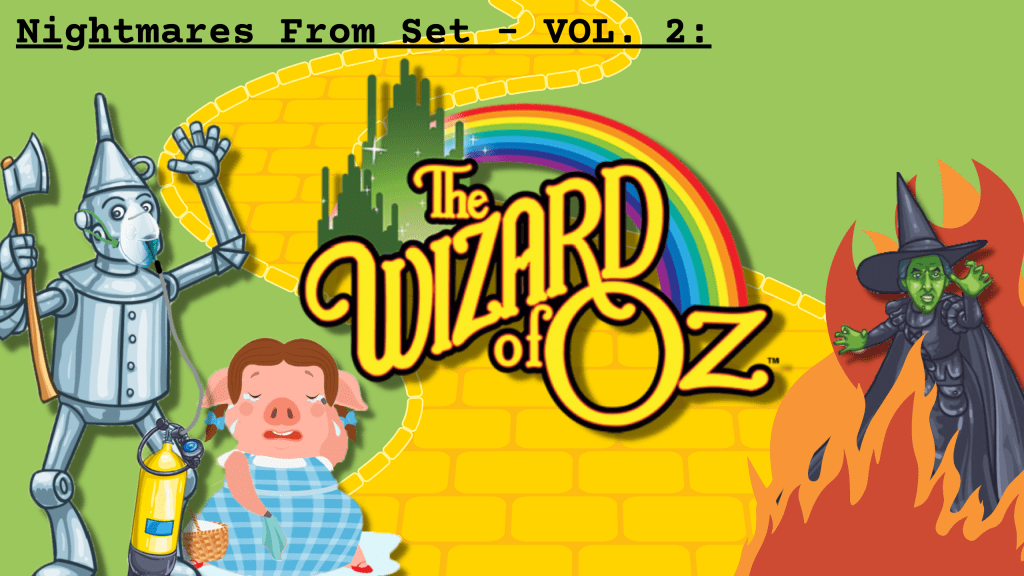
As a producer, as a director, and especially as an actor I wouldn’t have wanted to have been anywhere near this set. A little over 80 years ago, the timeless movie “The Wizard of Oz” was released. Many people believe it to be the first film released in technicolor, while that is false, 1939 was a huge year for movies all across the world when it came to new technology and “The Wizard of Oz” goes down as one of the most influential films of all time, but making it was no easy stroll down the yellow brick road.
Ill Made Costumes:
The first obstacle the production team faced was during rehearsals the original actor casted to play the tin man became widely ill from the makeup that was used to paint him. In an article written by Vanity Fair, the actor Buddy Ebsen, woke up in the middle of the night “screaming from violent cramping in his hands, arms, and legs. When he had difficulty breathing, his wife called an ambulance and rushed him to the hospital. He remained in an oxygen tent for two weeks, recovering from the pure aluminum he had ingested into his lungs”. (Miller) You would think from there the studio would halt production and wait for him to get better to continue, but at MGM back in the day was money so after scolding Ebsen about getting back to work and seeing that he couldn’t they hired a new actor, Jack Haley. The studio also did go back and replace the aluminum make up with something less hazardous but Haley still ended up with ugly eye infections from getting it his while filming.
The tin man wasn’t the only character whose costume was ill made and unbearable to wear for long periods of time. The Wicked Witch of the West’s face had been permanently tuned green for months, once she realized that the makeup and socked into her skin because she was wearing it for so long. Margaret Hamilton’s friend alerted her, about a month and a half before filming ended, that she looked “so odd.” When she looked in the mirror, the actor realized the friend was right: Her Wicked Witch of the West makeup had “sunk into my skin. It must have been months before my face was really normal again” (Miller).
As for the Cowardly Lion and the Scarecrow their costumes were made so thick and heavy that they felt as though they were suffocating. The scarecrows skin layer wasn’t porous so he couldn’t breathe through his skin and sweat. And the lion’s costume was made from actual lion hair and weighted a ton and because the actors sweat so much in it, it had to be industrially cleaned everyday of filming.
Now a days, technology has come so far in make up and costuming that the superheros we see in every Hollywood blockbuster have ventilation systems built into their heavy costumes so it’s like having a built in air conditioner. The all blue makeup that used to take hours upon hours to paint the the X-men character Mystique has been made so it only takes an hour or two and can be removed easily and prosthetics and face painting over all have such safety regulations that you would never hear of an actor being stained or hospitalized due to it.
Special Effects Gone Wrong:
Another aspect that made The Wizard of Oz such a captivating movie was its use of early special effects. The Wicked Witch of the West explodes and melts, it snows, there’s a whole tornado. When this movie first came out those things were rarely ever seen before and it was mind blowing for audiences to with in theaters, but how they achieved those things weren’t exactly rated highly for their safety.
In an article written by Mirror on the horrors of the Wizard of Oz set the author goes into detail about the excruciating experience of when actress Maggie Hamilton who play’d the Wicked Witch of the West, caught on fire. “Hamilton was supposed to descend while a fire rose up but it illuminated before she descended and she suffered burns on her face and hands. She spent six months recuperating at home and in hospital” (Knight). After recuperating and coming back to set MGM wanted her to do another fire stunt. Hamilton put her foot down and said no so her stunt double did it and was also severely burned after a pipe exploded. “Stunt player Betty Danko spent 11 days in the hospital and her legs were permanently scarred” (Knight). And because it was the 1930’s in Hollywood females were payed no where near the same amount as their male counter parts and she was reportedly only payed about $35 for all of her pain and suffering.
Another memorable scene is when Dorothy wakes up in a poppy field with snow falling on her and the rest for the crew that snow isn’t computer generated like it could be now instead it was crystallized asbestos. The lovely way Mirror puts it is, “That’s right, Judy and co were being doused in carcinogens”. (Knight)
Looking at how careless the production team was and how poorly treated the stun performers were it’s great to see that today stunt performers have union protecting them and have set rules and guidelines to keep them and everyone around them safe. Just a simple fire stunt like the one the wicked witch of the east was out through would have had layers of protective gear on and KY jelly keeping her cool and fire retardant. A Hollywood stunt professional actually takes you through the process on the Youtube channel, Corridor Crew, of the layers that go on stunt performers before they’re lit on fire.
The Mistreatment of Judy Garland:
Judy Garland was a treasure in this film, but she wasn’t treated like it. MGM producers and studio heads thought she was far too fat and pig like and that she wasn’t ever going to amount to anything. They referred to her as “a fat little piggy with pig tails”. She was also basically the least paid main character in the movie. “Of the film’s 10 main cast members, 16-year-old star Judy Garland got the second-lowest salary—making more than only her canine companion, Terry, who played Toto.” (Miller).
Later in life Garland herself and other actors from the film came forwards and talked about the horrible behavior of the actors who played the munchkins. In an interview with Jack Park, Garland referred to them as drunks who thought they could get away with anything. “Garland added that all the munchkins were housed in one hotel in Culver City. They spent every night getting “smashed” and had to be captured using butterfly nets” (Burke). Judy’s ex-husband and cast mates also said that at the age of 16 the munching would put their hands up her skirt and just make life miserable and uncomfortable for her on set.
Of course a few of the munchkins themselves have spoken up and said that was true at all. “Judy was telling it according to her pills and booze that day. She left behind a legacy of untruths about us…There were a couple of kids from Germany who liked to drink beer. They drank beer morning, noon and night, and got in a little trouble. They wanted to meet the girls, but they were the only ones” (Burke). Which makes this just another case of he said verses she said.
What makes this even more sad is that sexually assault and the unfair treatment of women in the entertainment industry isn’t new and unfortunately hasn’t gone away. It has gotten better the same way makeup and costumes have gotten lest toxic and stunt performances have gotten more safe, but the mistreatment of women is still a very large problem. Just two years ago the #metoo movement started after a rash of powerful Hollywood men were ousted for sexually assaulting women. And it movie horror stories like this one where you can see where the harsh and money pinching movie producer stereotype came from.
Overall, while the movie might have been a nightmare to make it goes down as one of the best yet, I can’t seem to not think that a few of the actors who had to live with long lasting damage from filming wouldn’t have really cared if the movie was a hit but would have preferred it to have just been safer.
 taylorsniffen.com